Think about it: You trust a surgeon to operate on you. You trust a pilot to fly your plane.
Yet somehow, when it's time to invest, we take tips from a random person on social media without checking their background.
Popularity doesn't equal expertise. Sure, some social media advisors know their stuff. But most just sound confident. This article helps you spot the difference and why your money deserves better because your financial future is too important to get wrong.
The Rise of the “Everyone’s an Expert” Era
Social media gave everyone a megaphone. Suddenly, you didn't need qualifications to give financial advice. All you need to do is press record and upload.
These "finfluencers" fill a real gap as traditional financial advice can be expensive and intimidating. Social media makes it accessible and levelled the playing ground for everyone. Yes, it’s genuinely helpful…
until it isn't.
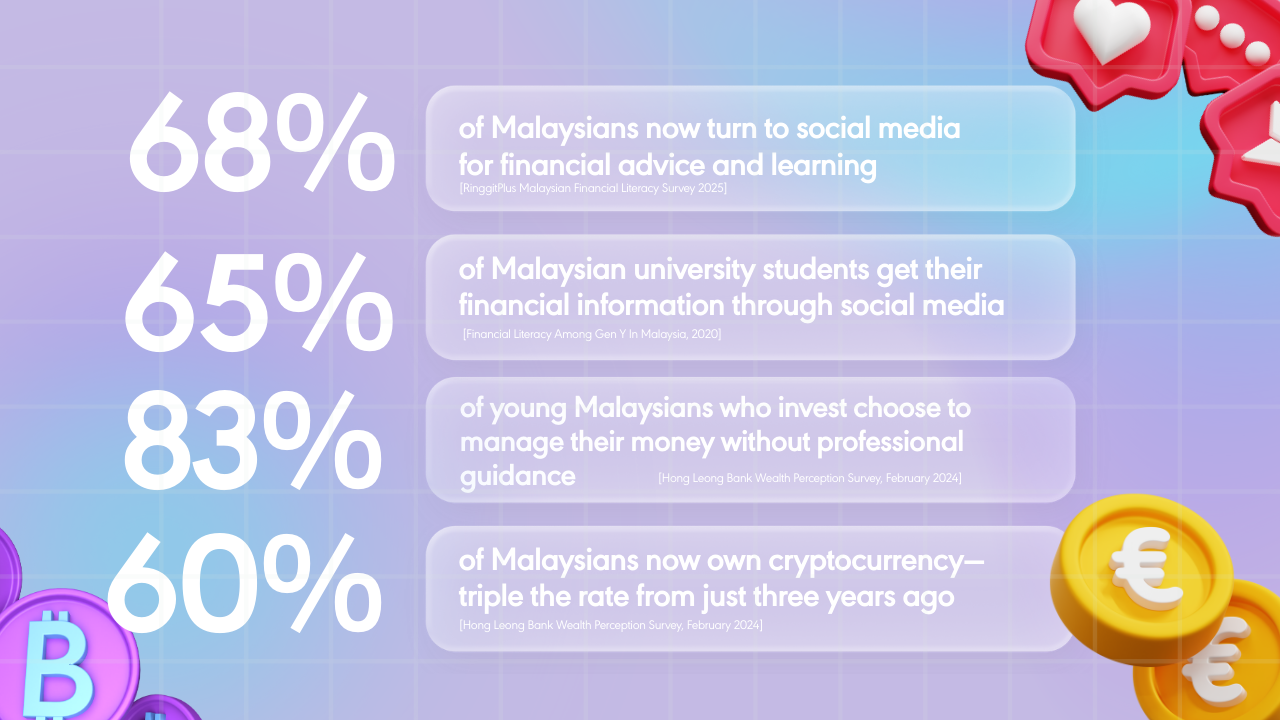
Advice that once seemed expensive and exclusive became free and accessible with the rise of social media. But accessible doesn't mean reliable. Is what you're reading actually good guidance? Does the person giving it have proper qualifications? Are they licensed and regulated by authorities?
Why This Matters: Real Money, Real Consequences
Bad advice may costs you.
In 2023, the Securities Commission Malaysia received 3,262 complaints and enquiries about scams and unlicensed activities—a 321% increase from 2019 [The Edge Malaysia, September 2024]. By 2024, that number climbed to 3,380 cases, with authorities blocking 128 websites, 113 Telegram accounts, 78 Facebook accounts, and 10 Instagram accounts [Securities Commission Malaysia, InvestSmart Fest 2024].
The SC also issued 274 new entries to its Alert List for unauthorized operators [The Edge Malaysia, September 2024]. Unlike some regulators who track problems with licensed firms, Malaysia's SC data primarily tracks unauthorized and unlicensed operators—showing just how many bad actors are out there trying to take advantage of people.
And it's getting worse. The sophistication of scams keeps evolving, with fraudsters now using deepfake AI to impersonate prominent personalities and reputable companies [Securities Commission Malaysia, 2024].
The “Advice Gap”
The gap between who gives advice and who is qualified to give advice is growing. Young people, in particular, are increasingly turning to platforms where popularity and virality count more than credentials.
The numbers tell a concerning story.
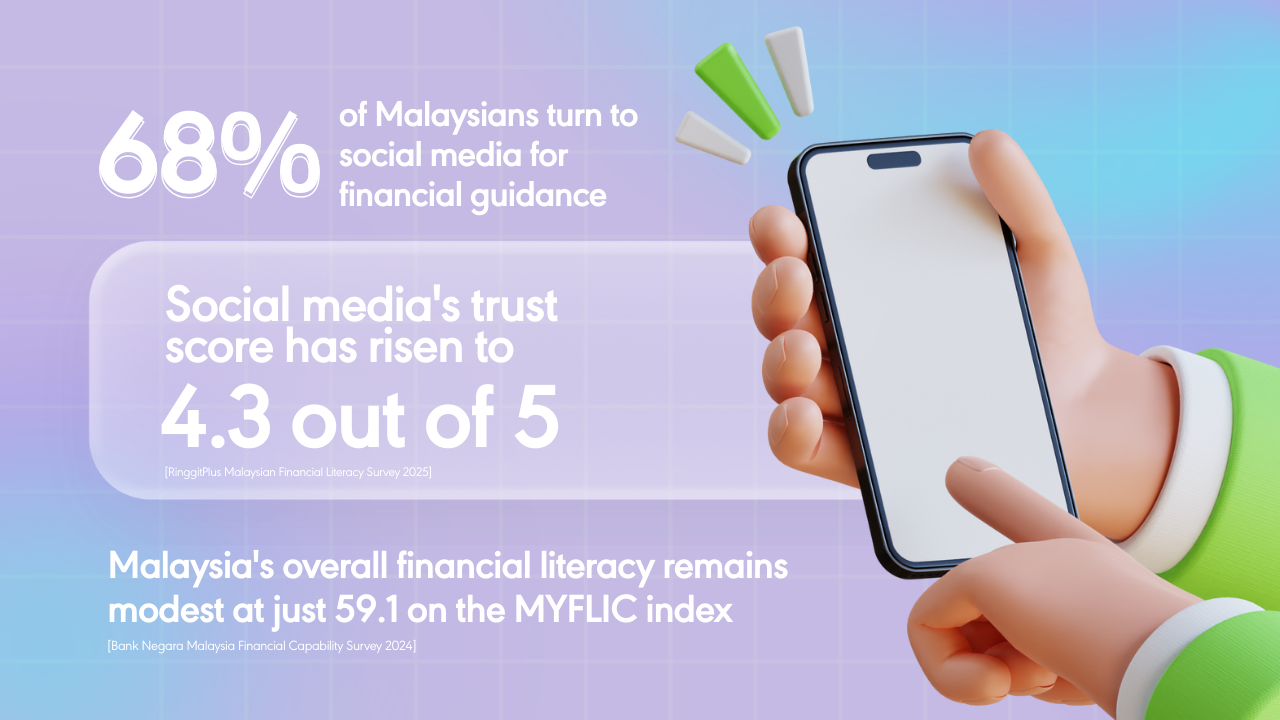
Malaysian youth show particularly troubling patterns. Research shows that young people here score "poor" (37.3%) on investment literacy, despite their high confidence [European Proceedings, Financial Literacy Among Gen Y In Malaysia]. They're getting information, but not the right kind. Only 22% of Malaysians have ever attended a formal personal finance or investment course, though 46% plan to [RinggitPlus Malaysian Financial Literacy Survey 2023].
The gap is stark: 94% of Malaysians say they take action to address financial knowledge gaps, yet many turn to unvetted sources [RinggitPlus Malaysian Financial Literacy Survey 2023].
Social media feels accessible and trustworthy but accessibility doesn't guarantee quality.
Analogy: Would You Let a Gamer Fly an Airplane?
You have probably seen someone online who’s really good at what they do. For example: a gaming streamer who gets the perfect score in an airplane simulator game. But would you let them pilot a real plane?
Obviously not. Flying requires training, certification, and constant oversight. You can't just be confident and popular; you need actual qualifications.
Investing works the same way. The stakes are just as high. Yet somehow we're more careful about who flies our planes than who handles our money.
What Real Expertise Actually Means
So what should you look for? What separates someone who knows what they're doing from someone who just sounds good?
Regulation and oversight: Are they licensed by the Securities Commission Malaysia? Do regulators monitor what they do?
Transparent processes: Can they explain their decision-making? Do they hide fees in the fine print?
Values alignment: Do their investments match your principles? (Particularly important if you want Shariah-compliant or ethical options)
Disciplined approach: Do they follow a structured strategy, or just chase whatever's trending?
Most viral financial advice fails these basic tests.
Important reminder: Under Malaysian law, promoting capital market products for commissions without an SC license is a criminal offense. Violators face fines up to RM10 million, imprisonment up to 10 years, or both [Securities Commission Malaysia Guidance Note on Provision of Investment Advice, July 2024].
Two Different Paths You May Take
The viral route:
You see a video promising 10× returns in a week on some crypto coin. You invest RM1,000. The price jumps, and for a moment, you feel brilliant. Then it crashes. You've either lost money outright, or you've missed out on the kind of steady, compounding growth that actually builds wealth over years.
The expert route:
Your money goes into a diversified portfolio monitored by people with actual authority licenses and qualifications. It grows steadily over time, aligned with your risk tolerance and values.
One approach treats your money like entertainment, something exciting to talk about at dinner. The other treats it like what it actually is: your future, your family's security and your ability to retire someday.
Final Thoughts: What You Should Do Now
Yes, there are genuine “finfluencers”. Often the genuine ones would inform their viewers to refer to experts for financial advice.
But here are quick questions to ask before you listen to someone in social media?
- Is he or she regulated by the authorities?
- Are there any entities that is verifying the information?
- Does it sound to good to be true?
When it comes to your money, don’t just trust anyone who looks like an expert. Choose only licensed or regulated experts – and always verify their credentials. Because your financial future deserves more than a viral moment.
Disclaimer: This article is for general information and educational purposes only and has not been reviewed by the Securities Commission Malaysia. The information does not constitute investment advice or an offer to buy or sell any capital market product. Always verify that your financial adviser or platform is licensed and regulated by the relevant authorities.