Interest repayments don’t just weigh heavily on poor and middle-class families, they also crush corporations and nations. In 2023, the Institute of International Finance reported that global debt has reached $313 trillion. Countries like Pakistan and Sri Lanka are prime examples of how debt, fueled by interest payments, can bring national economies to the brink of collapse.
Impact on nations
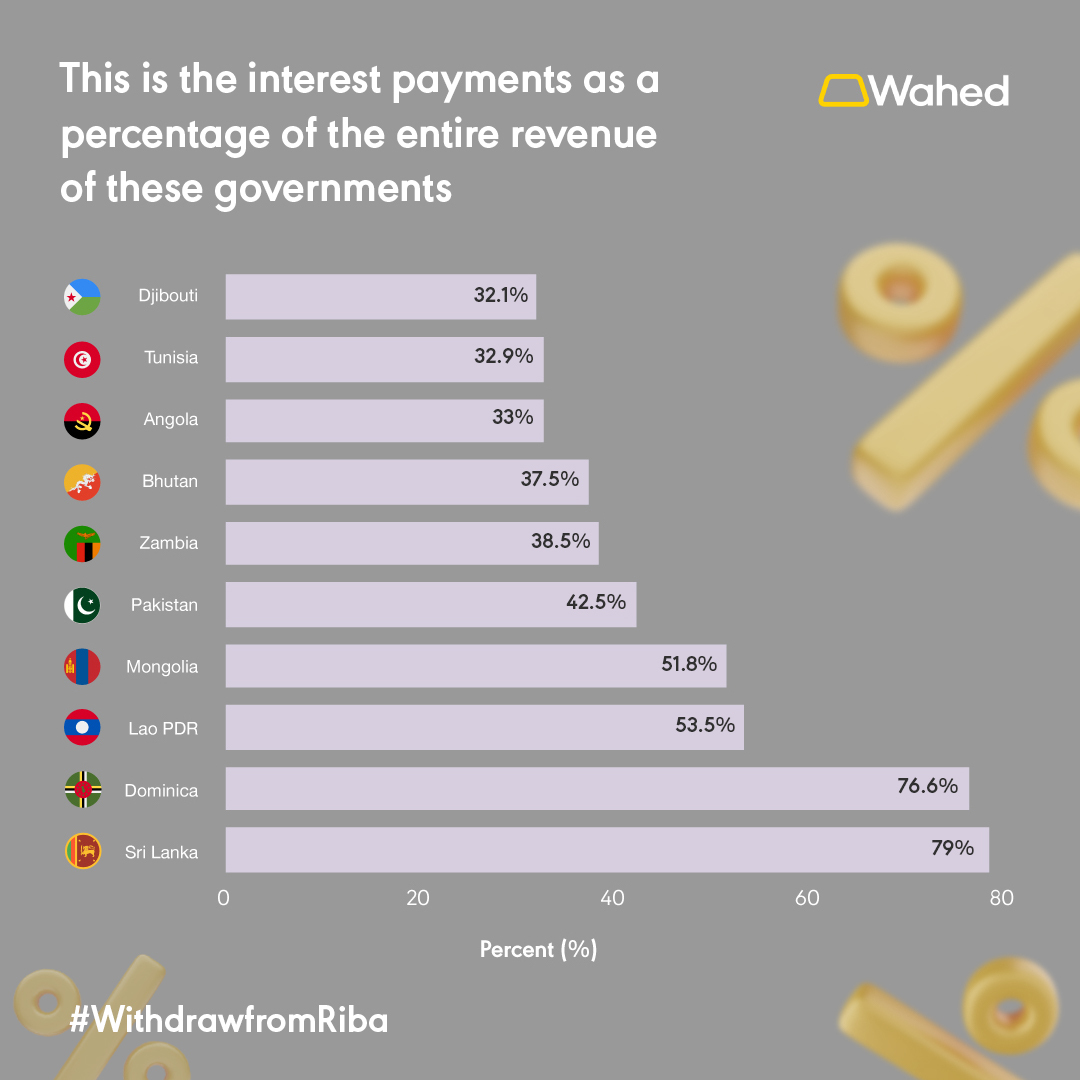
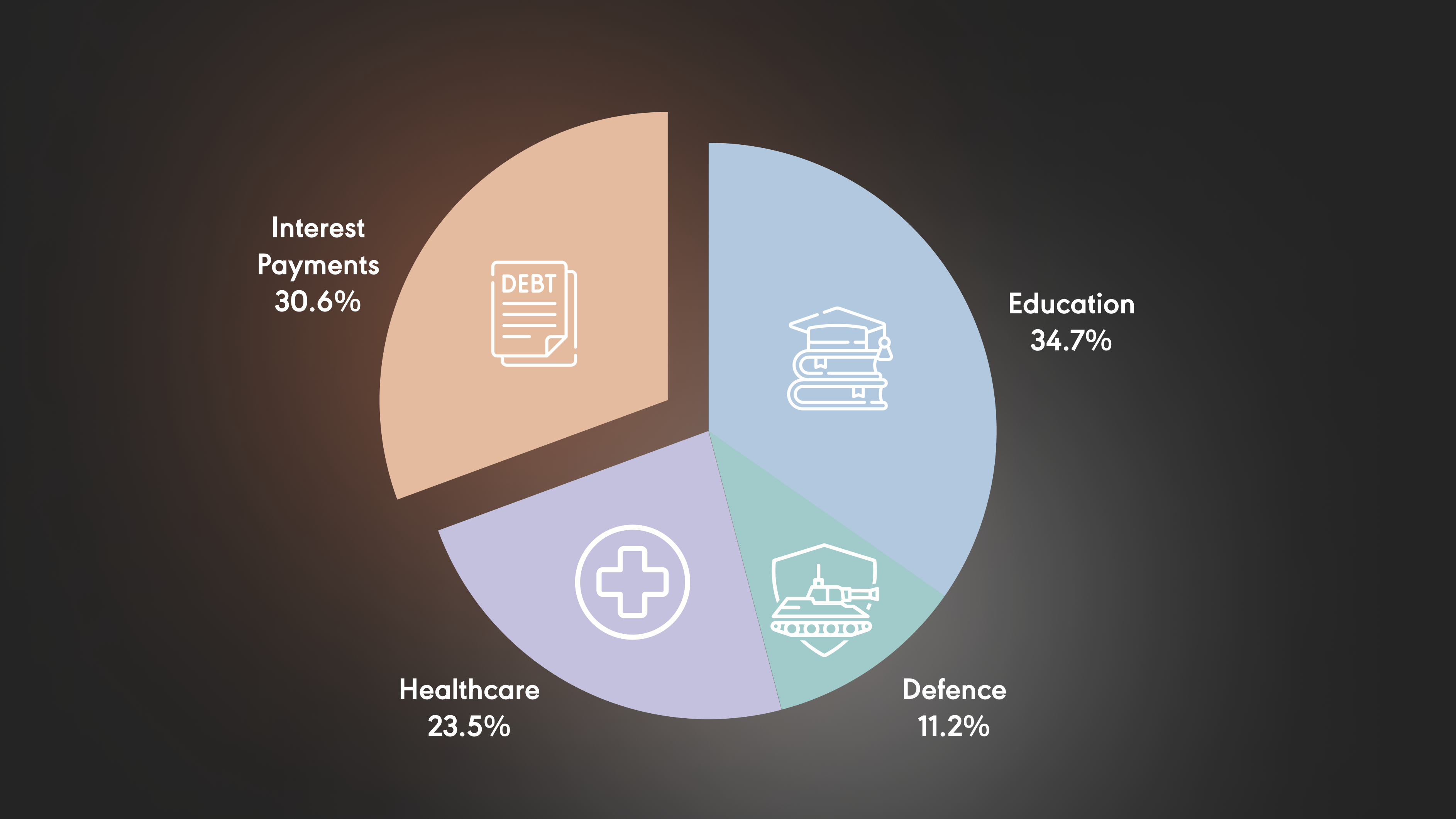
Developing countries are particularly vulnerable to the repercussions of high debt and interest payments. In 2022, these nations spent a record $443.5 billion servicing their external public debt, a significant increase that diverts funds from critical sectors like health and education. Furthermore, 54 developing countries allocate more than 10% of their revenues to interest payments, with 48 spending more on interest than on education or health.
Pakistan has to spend 62% of its fiscal revenues such as taxes, on its interest payments. Sri Lanka reported that they would spend 75% of their revenue on just debt payments. These concerning statistic limits these nations’ ability to invest productively, thereby impeding economic growth and social development.
Malaysia is not left out too
Malaysia’s national debt has been steadily increasing over the years. As of 2023, the country’s total debt stood at RM1.5 trillion, equivalent to about 65.6% of its Gross Domestic Product (GDP). This debt is a combination of domestic and external borrowings, both of which come with interest obligations that need to be serviced regularly. The increasing debt-to-GDP ratio signals that a growing portion of the country’s resources is being directed toward managing debt.
This year, Malaysia is projected to spend approximately RM46.1 billion on debt servicing, which accounts for around 16% of the government's total revenue. As the nation's debt continues to increase, this figure is expected to rise.
How does the Government go into debt?
Every year, the Malaysian government announces the national budget, and one of the areas they would allocate funds to is debt repayments. A governments revenue, or balance of payments can be simplified as:
Balance of trade = Government income (Assets) - Government expenditure (liabilities)
Most of the time, the government's income is insufficient to cover necessary expenditures or make long-term investments for development, such as building public schools, expanding public transport, and more. The government must continue spending to support the nation’s growth, whether through subsidies or by providing essential public services. Without this spending, the country risks coming to a halt.
To make up for the shortfall, the government raises money by borrowing from local and international financial institutions through the issuance of bonds. Bonds are therefore like loans that the government takes; with the promise to pay the bondholders back the full amount after a set time with interest. This repayment occurs in two forms:
- Coupon payments: Regular interest payments made to bondholders throughout the loan period.
- Principal repayment: The full amount borrowed, which is returned to the bondholder upon maturity of the bond.
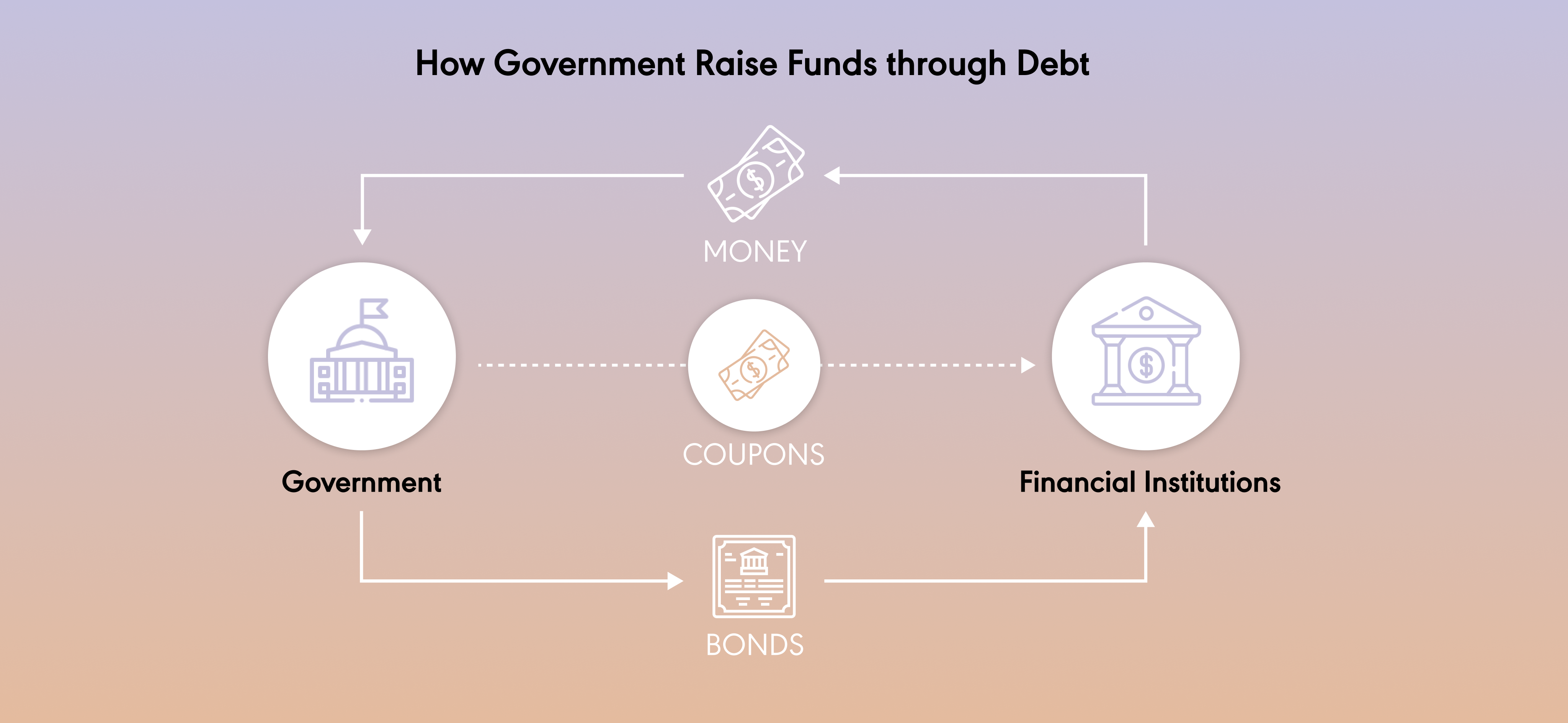
This system allows governments to borrow large sums of money, but it also means they accumulate debt that needs to be repaid, often with significant interest, contributing to the overall national debt.
The global debt is an aggregate of debts owed by governments, financial institutions, corporations, and even individuals. Debt is often seen as a catalyst for growth and development, but the cost of servicing this debt frequently limits future progress. When combined with interest and inflation rates, it can create a vicious cycle of borrowing that is difficult to escape.
The scary effects of debt
- Stagnation of Economic Growth: With governments, corporations, and individuals all focused on repaying debt, the ability to invest in future growth is limited. This results in economic stagnation, where there is little progress despite increasing levels of borrowing.
- Widening Inequality: The burden of debt servicing falls disproportionately on individuals, particularly low-income households. As governments reduce social spending to service debt, those who rely on public services are hit the hardest, deepening inequality.
- Increased Borrowing: As debt servicing limits growth, the need for additional borrowing increases. Governments and corporations take on more debt to fund essential services or expansion, further deepening the cycle of indebtedness.
What can you do though?
Although the debt as we explained above is at the national level, the mechanics is the same and affects ordinary people like you too. Just by partially withdrawing from this vicious cycle of debt and interest, you're already making a significant impact. As Mahatma Gandhi once said, "Be the change you wish to see in the world." If one person makes the change, it can inspire others, creating a ripple effect that encourages more people to step away from the burden of riba.
At Wahed, we're proud to have over 400,000 investors worldwide who have chosen to grow their wealth free from interest and riba. Join us in making the world a more just and equitable for all.